
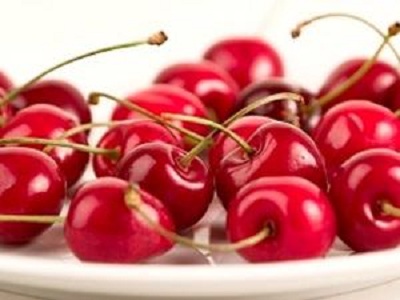
Roadside shade trees that are found to have small little red fruit and sweetened, that tree is growing very easy kersen.Pohon and easily dispersed because of the help of the fruit-eating birds, especially in areas kering.Tidak many people know the benefits of cherry fruit.

In terms of nutritional content is not less cherry fruit with other fruit such as mango. The content of vitamin C 30 mg mango, cherry fruit while 80.5 mg, in addition to the calcium content of 124.6 mg cherry fruit, much more than mangoes are only 15 mg.
"In Indonesia cherry fruit is traditionally used to treat gout by eating a cherry sebayak 9 points 3 times a day and is proven to reduce pain caused from gout, cherry leaf decoction also has anti-inflammatory and reduce the heat and even content cherry leaf decoction can be efficacious as the killer turns out harmful microbes and can be used as an anti-septic.
How to Make
explain how to make cherry syrup. Ingredients include ripe cherry fruit, water, sugar, cinnamon, salt, vanilla, food coloring and tools used are buckets, pots, mortar (mortar), filters and bottles for packaging.
Selected cherry fruit is ripe (red) and then washed thoroughly. Cherry pulp is separated from the skin by means of mashed and boiled with a ratio of 1 part water to 3 parts cherry. (1:3).
Cherry and mixed with sugar in the ratio 1:2 with vanilla, salt, and cinnamon to taste until boiling and should continue stirring. After boiling cherry syrup is filtered to remove the pulp and dye to make it more interesting and packed in bottles.
Products processed from cherry does not use any chemicals all natural. Therefore, the product is healthier than processed products on the market in general
Noted, most products in the syrup as existing, generally only provide flavor and freshness while drinking alone, and do not have the advantage or benefit to health in particular.
Hence processed cherry products that will be beneficial to society, particularly to health as it relates to property that is owned by the cherry to treat gout.
Sources: suaramerdeka
In terms of nutritional content is not less cherry fruit with other fruit such as mango. The content of vitamin C 30 mg mango, cherry fruit while 80.5 mg, in addition to the calcium content of 124.6 mg cherry fruit, much more than mangoes are only 15 mg.
"In Indonesia cherry fruit is traditionally used to treat gout by eating a cherry sebayak 9 points 3 times a day and is proven to reduce pain caused from gout, cherry leaf decoction also has anti-inflammatory and reduce the heat and even content cherry leaf decoction can be efficacious as the killer turns out harmful microbes and can be used as an anti-septic.
How to Make
explain how to make cherry syrup. Ingredients include ripe cherry fruit, water, sugar, cinnamon, salt, vanilla, food coloring and tools used are buckets, pots, mortar (mortar), filters and bottles for packaging.
Selected cherry fruit is ripe (red) and then washed thoroughly. Cherry pulp is separated from the skin by means of mashed and boiled with a ratio of 1 part water to 3 parts cherry. (1:3).
Cherry and mixed with sugar in the ratio 1:2 with vanilla, salt, and cinnamon to taste until boiling and should continue stirring. After boiling cherry syrup is filtered to remove the pulp and dye to make it more interesting and packed in bottles.
Products processed from cherry does not use any chemicals all natural. Therefore, the product is healthier than processed products on the market in general
Noted, most products in the syrup as existing, generally only provide flavor and freshness while drinking alone, and do not have the advantage or benefit to health in particular.
Hence processed cherry products that will be beneficial to society, particularly to health as it relates to property that is owned by the cherry to treat gout.
Sources: suaramerdeka
Chayote (sechium edule) is a member of the gourd family-Labuan which was originally cultivated in Central America by the Mayan and Aztec civilizations. After the Spanish conquest, squash and then spread throughout the world, including Indonesia with the Dutch. The name "squash" is actually misleading, because it was not coming from Siam or Thailand. Around the world, chayote is known by various names, including chayote (UK), welok (Java), christophene (France) and chowchow (China). As a non-seasonal fruits, squash easily found in markets throughout the year. Shaped like a large pear with colored light green or yellowish green. Weighing varied from 50 g to 2 kg with a length of 5 cm to 20 cm. There are two types of squash, which are smooth-skinned and the skin with tiny spines.

Vegetables and Drug
Squash is usually cooked as a vegetable, such as pan-fried with chili or disup as a mixture of spinach or vegetable acids. You can also fill the squash with a mixture of ground beef and baked in the oven. Taste mild flesh that makes it suitable for a variety of recipes.
Besides the food, squash is also useful as a natural remedy. Various ethnic groups in Central America have traditionally used this plant to dissolve kidney stones and other urinary disorders treat. The Aztecs, in particular, boil squash leaves and drink the water as much as 3-5 times a day to treat kidney stones. Research shows that the ability to cure kidney stones, uric acid, and other metabolic problems from diuretic properties of the leaves and fruit of the plant. Chayote also been reported to help reduce atherosclerosis and hypertension.
Nutrient content
Squash have high levels of vitamin C, low calorie, low sodium, no cholesterol, and is a good source of fiber. Various nutritional and health benefits squash are as follows:
1. Folate. Chayote is a source of folate, a B vitamin that is beneficial for pregnant women and cardiovascular health.
2. Vitamin C. Vitamin C is a powerful antioxidant that can protect cells from damage by free radicals.
3. Manganese. Manganese in squash helps the body convert protein and fat into energy.
4. Fiber. Helps prevent constipation and digestion.
5. Copper. Helps maintain healthy iodine in the thyroid.
6. Zinc. Helps nourish the skin.
7. Vitamin K. Assist healthy bones and teeth.
Tips for You
When buying squash, choose one that is hard and has a smooth surface. Skinned fruits wrinkles and flabby signaling have long learned and in the process of decay. You can store the squash in the refrigerator up to seven days. Squash can be eaten all the parts, including the skin and soft seeds inside. You do not have to peel the skin before cooking.
source: majalahsehat.com

Vegetables and Drug
Squash is usually cooked as a vegetable, such as pan-fried with chili or disup as a mixture of spinach or vegetable acids. You can also fill the squash with a mixture of ground beef and baked in the oven. Taste mild flesh that makes it suitable for a variety of recipes.
Besides the food, squash is also useful as a natural remedy. Various ethnic groups in Central America have traditionally used this plant to dissolve kidney stones and other urinary disorders treat. The Aztecs, in particular, boil squash leaves and drink the water as much as 3-5 times a day to treat kidney stones. Research shows that the ability to cure kidney stones, uric acid, and other metabolic problems from diuretic properties of the leaves and fruit of the plant. Chayote also been reported to help reduce atherosclerosis and hypertension.
Nutrient content
Squash have high levels of vitamin C, low calorie, low sodium, no cholesterol, and is a good source of fiber. Various nutritional and health benefits squash are as follows:
1. Folate. Chayote is a source of folate, a B vitamin that is beneficial for pregnant women and cardiovascular health.
2. Vitamin C. Vitamin C is a powerful antioxidant that can protect cells from damage by free radicals.
3. Manganese. Manganese in squash helps the body convert protein and fat into energy.
4. Fiber. Helps prevent constipation and digestion.
5. Copper. Helps maintain healthy iodine in the thyroid.
6. Zinc. Helps nourish the skin.
7. Vitamin K. Assist healthy bones and teeth.
Tips for You
When buying squash, choose one that is hard and has a smooth surface. Skinned fruits wrinkles and flabby signaling have long learned and in the process of decay. You can store the squash in the refrigerator up to seven days. Squash can be eaten all the parts, including the skin and soft seeds inside. You do not have to peel the skin before cooking.
source: majalahsehat.com
Do not underestimate the red fruit is small. The content of antioxidants in it turned out to be quite effective in preventing gout pain.

Uric acid or gout is one kind of rheumatic disease caused by uric acid crystallizes in the joints, causing swelling and pain. Joints in the feet are frequently affected body part gout.
In a study of 663 patients for a year, found that regular consumption of cherries may reduce gout attacks to 35 percent. Cherries can be consumed in the form of fresh or extract three servings in two days.
Previous research suggests that chemical compounds in fruits can reduce the levels of uric acid in the blood.
In patients who combine medication uric acid from a doctor with the consumption of cherries, gout attacks they reduced up to 75 percent compared with patients who did not take medication or do not eat cherries.
"It's long been known that some kinds of fruit, especially cherries, can prevent gout and rheumatoid arthritis were included in the diseases caused by inflammation in the joints," says Prof. Alan Silman, medical director of Arthritis Research UK.
He explained that the content of antioxidants in cherries is an inhibitor (inhibitor) of natural enzymes that are targeted by several anti-inflammatory drugs.
"From this study proved that uric acid medication and regular eating cherries will significantly reduce gout attacks," Silman said.
Source: dailymail.co.uk, kompas.com
Uric acid or gout is one kind of rheumatic disease caused by uric acid crystallizes in the joints, causing swelling and pain. Joints in the feet are frequently affected body part gout.
In a study of 663 patients for a year, found that regular consumption of cherries may reduce gout attacks to 35 percent. Cherries can be consumed in the form of fresh or extract three servings in two days.
Previous research suggests that chemical compounds in fruits can reduce the levels of uric acid in the blood.
In patients who combine medication uric acid from a doctor with the consumption of cherries, gout attacks they reduced up to 75 percent compared with patients who did not take medication or do not eat cherries.
"It's long been known that some kinds of fruit, especially cherries, can prevent gout and rheumatoid arthritis were included in the diseases caused by inflammation in the joints," says Prof. Alan Silman, medical director of Arthritis Research UK.
He explained that the content of antioxidants in cherries is an inhibitor (inhibitor) of natural enzymes that are targeted by several anti-inflammatory drugs.
"From this study proved that uric acid medication and regular eating cherries will significantly reduce gout attacks," Silman said.
Source: dailymail.co.uk, kompas.com
Uric acid or gout is a disease that has existed from time immemorial. Egyptians about 5000 years ago and the Greeks some twenty centuries later was called. Al-Razi or Rhazes, one prominent Muslim doctors in medieval times, suggesting some kind of therapy to treat gout.

Uric acid is known as "the disease of kings" because it affects many rich people and nobles who like to eat nice meals but less physical activity. Some famous figures in history known to suffer from gout, among them: Kublai Khan, King Henry VIII, Nostrodamus, Isaac Newton, Thomas Jefferson, and King Charles V, who led the British Empire at its peak. When we look from the play ketoprak and folklore, Menak Jinggo-king Blambangan (Banyuwangi) who rebelled from the Majapahit-apparently also suffer from gout. This is evident from a limping step and he often complained of his legs.
Because the history of gout that long, traditional medicines have long used natural man to handle. Here are some of them:
1. Sidaguri (sida rhombifolia)
Sidaguri are wild plants that grow at the edge of the road, lawns, forests, fields, and places with direct sunlight or a slightly shielded. Sidaguri containing ephedrine alkaloids, particularly in the seeds, which have a cooling effect on the body (anti-fever), digestion, shrinking the tissue (astringent), stimulates the production of urine (diuretic) and strengthens stamina. In addition to effective for gout, sidaguri also useful to overcome hematuria, cystitis, sexual weakness and poor sperm quality.
2. Legundi (vitex negundo)
Flowers and leaves Legundi is one herb that is very effective in controlling pain and inflammation due to arthritis and sciatica. Legundi is creeping shrub tree with an irregular crown, aromatic, and 1-4 m high. This tree can be found as wild plants in the teak forest, secondary forest, on the edge of the road and rice fields and flowering in January-December.
3. Seed (Nigella sativa)
Seed or black cumin has been used for more than 2000 years by the Greeks and the Middle East for various treatments. An anti-inflammatory effect is very suitable to relieve inflammation caused by uric acid. In addition, black cumin is also efficacious to relieve asthma, flu and allergies, reduce high blood pressure, prevent gallstones, cancer prevention, and many others.
4. Salai guggul (Boswellia serrata)
This plant is widely grown in India and South Asia. Resin derived from purified plant trees and used to treat the pain and inflammation of gout. Boswelik acid contained in it is also known to reduce cholesterol and protect the heart against bacterial endotoxins. Part of the non-acid salai guggul tree extract can lower blood pressure and is soothing.
5. Red Ginger (Zingiber officinale)
Red Ginger is a herbal anti-inflammatory. In addition, red ginger increasing appetite and facilitate the digestive and respiratory systems. Red Ginger helps reduce inflammation in the joints and discard pile uric acid by improving blood circulation.
6. Brotowali (Tinospora cordifolia)
Brotowali rated as one of the main herbal enhancers immune system (immuno-modulator). Because of its nature, the brotowali make the body more healthy to disease and more youthful. In addition to relieve gout, brotowali also useful to overcome diabetes, hypertension, high cholesterol and nourish the body's vital organs.
7. Green tea
Green tea contains many polyphenols that work as antioxidants preventing gout attacks. In addition, green tea also contains vitamin C and vitamin E are beneficial for gout sufferers. Research by the University of Michigan showed that green tea contains a compound called epigallocatechin-3-gallate (EGCG), which prevents the production of molecules that cause inflammation and joint damage in patients with gout.
Uric acid is known as "the disease of kings" because it affects many rich people and nobles who like to eat nice meals but less physical activity. Some famous figures in history known to suffer from gout, among them: Kublai Khan, King Henry VIII, Nostrodamus, Isaac Newton, Thomas Jefferson, and King Charles V, who led the British Empire at its peak. When we look from the play ketoprak and folklore, Menak Jinggo-king Blambangan (Banyuwangi) who rebelled from the Majapahit-apparently also suffer from gout. This is evident from a limping step and he often complained of his legs.
Because the history of gout that long, traditional medicines have long used natural man to handle. Here are some of them:
1. Sidaguri (sida rhombifolia)
Sidaguri are wild plants that grow at the edge of the road, lawns, forests, fields, and places with direct sunlight or a slightly shielded. Sidaguri containing ephedrine alkaloids, particularly in the seeds, which have a cooling effect on the body (anti-fever), digestion, shrinking the tissue (astringent), stimulates the production of urine (diuretic) and strengthens stamina. In addition to effective for gout, sidaguri also useful to overcome hematuria, cystitis, sexual weakness and poor sperm quality.
2. Legundi (vitex negundo)
Flowers and leaves Legundi is one herb that is very effective in controlling pain and inflammation due to arthritis and sciatica. Legundi is creeping shrub tree with an irregular crown, aromatic, and 1-4 m high. This tree can be found as wild plants in the teak forest, secondary forest, on the edge of the road and rice fields and flowering in January-December.
3. Seed (Nigella sativa)
Seed or black cumin has been used for more than 2000 years by the Greeks and the Middle East for various treatments. An anti-inflammatory effect is very suitable to relieve inflammation caused by uric acid. In addition, black cumin is also efficacious to relieve asthma, flu and allergies, reduce high blood pressure, prevent gallstones, cancer prevention, and many others.
4. Salai guggul (Boswellia serrata)
This plant is widely grown in India and South Asia. Resin derived from purified plant trees and used to treat the pain and inflammation of gout. Boswelik acid contained in it is also known to reduce cholesterol and protect the heart against bacterial endotoxins. Part of the non-acid salai guggul tree extract can lower blood pressure and is soothing.
5. Red Ginger (Zingiber officinale)
Red Ginger is a herbal anti-inflammatory. In addition, red ginger increasing appetite and facilitate the digestive and respiratory systems. Red Ginger helps reduce inflammation in the joints and discard pile uric acid by improving blood circulation.
6. Brotowali (Tinospora cordifolia)
Brotowali rated as one of the main herbal enhancers immune system (immuno-modulator). Because of its nature, the brotowali make the body more healthy to disease and more youthful. In addition to relieve gout, brotowali also useful to overcome diabetes, hypertension, high cholesterol and nourish the body's vital organs.
7. Green tea
Green tea contains many polyphenols that work as antioxidants preventing gout attacks. In addition, green tea also contains vitamin C and vitamin E are beneficial for gout sufferers. Research by the University of Michigan showed that green tea contains a compound called epigallocatechin-3-gallate (EGCG), which prevents the production of molecules that cause inflammation and joint damage in patients with gout.
For those of you who always provide candied fruit for a snack, there is good news. Apparently, some kind of dried fruit is very beneficial for health. Overcoming illness that often arise in everyday life. Following recommendation:

Raisins: Osteoporosis
Boron and mineral substances contained in raisins to reduce bone loss. Especially in women entering menopause. You can mix in yogurt are rich in calcium. These alloys will produce optimal nutrition.
Dates: Fatigue
This fruit can be considered as energy-producing fruit. A relatively low glycemic index will release sugar slowly. This is what makes you stable energy throughout the day.
Cherries: Uric Acid
In medicine used to relieve joint inflammation, widely used material anthoycyanins. Well, it turns out a lot of material found in cherries. Quoted by the Daily Mail, a recent study conducted Michigan University also reveal if cherries can reduce inflammation by up to 50 per cent mark. For effective consumption, you can provide a half-cup of cherries twice a day.
Apricots: High blood pressure
Dried apricots, contain three times more potassium than bananas. Candied can help lower blood pressure. In fact, the Centers for Disease Control and Prevention in Atlanta also suggest eating more potassium as protection against high blood pressure and heart.
Cranberry: Bladder Infection
Especially in women more often have a bladder infection, it can be candied healthy snack. Studies in the United States said that if the active ingredients in two handfuls proanthocyanidins (42.5 grams) of cranberries could reduce E. coli in urine sempel women with the infection. (art)
source: VIVAlife
Raisins: Osteoporosis
Boron and mineral substances contained in raisins to reduce bone loss. Especially in women entering menopause. You can mix in yogurt are rich in calcium. These alloys will produce optimal nutrition.
Dates: Fatigue
This fruit can be considered as energy-producing fruit. A relatively low glycemic index will release sugar slowly. This is what makes you stable energy throughout the day.
Cherries: Uric Acid
In medicine used to relieve joint inflammation, widely used material anthoycyanins. Well, it turns out a lot of material found in cherries. Quoted by the Daily Mail, a recent study conducted Michigan University also reveal if cherries can reduce inflammation by up to 50 per cent mark. For effective consumption, you can provide a half-cup of cherries twice a day.
Apricots: High blood pressure
Dried apricots, contain three times more potassium than bananas. Candied can help lower blood pressure. In fact, the Centers for Disease Control and Prevention in Atlanta also suggest eating more potassium as protection against high blood pressure and heart.
Cranberry: Bladder Infection
Especially in women more often have a bladder infection, it can be candied healthy snack. Studies in the United States said that if the active ingredients in two handfuls proanthocyanidins (42.5 grams) of cranberries could reduce E. coli in urine sempel women with the infection. (art)
source: VIVAlife
White turmeric is a kind of white turmeric rhizome spices which are closely related to kencur. Unlike kencur, which is widely used as seasoning, ground Rapet more specifically used for the efficacy of treatment. Moreover, because the leaves are beautiful, wild Rapet also planted in home gardens as an ornamental plant.

Experts Herbal / Toga many use no artificial WHITE (Curcuma zedoaria) for treating Gout Clinical-Rheumatic because many contain ALP White Turmeric: Anti Lipid peroxidation can neutralize / reduce excess Certain substances in the body. also good for treating: High blood pressure, Diabetic and heart disease.
White turmeric (curcuma zedoaria) also contains: Ribozome In Acting Protein / RIP and Curcumin Anti Inflammatory for the treatment of other chronic diseases such as tumors, cancer, polyps, tonsils, ulcer, hemorrhoid, bronchitis, vaginal discharge, menstrual pain.
How to create / cultivate White Turmeric (Curcuma zedoaria) as follows:
A few cloves of White Turmeric (Curcuma zedoaria) washed thoroughly, while the skin do not peel. Once clean thinly sliced like sliced onions and then the results of these slices to dry. After kerig crushed or milled to a fine powder.
How to drink White Turmeric (Curcuma zedoaria) there are 2 ways:
1. By way Brewed: Mix 1 teaspoon (diperes) White turmeric powder (Curcuma zedoaria) with half a cup (200ml) warm water, stirring until smooth and drink.
2. By way Capsules: Add 1 teaspoon (diperes) White turmeric powder (Curcuma zedoaria) into the empty capsule shell (can be purchased at pharmacies) and then drink it with warm water.
Dosage White Turmeric (Curcuma zedoaria):
Treatment: 3 times daily (1 capsule / 1 teaspoon) after meals.
Prevention: 1 times daily (1 capsule / 1 teaspoon) after meals.
Warning: Not for pregnant women, breastfeeding mothers aged less than 5 months. and Children under 2 years
source: infosehat.technocompinfo.com
White turmeric (curcuma zedoaria) also contains: Ribozome In Acting Protein / RIP and Curcumin Anti Inflammatory for the treatment of other chronic diseases such as tumors, cancer, polyps, tonsils, ulcer, hemorrhoid, bronchitis, vaginal discharge, menstrual pain.
How to create / cultivate White Turmeric (Curcuma zedoaria) as follows:
A few cloves of White Turmeric (Curcuma zedoaria) washed thoroughly, while the skin do not peel. Once clean thinly sliced like sliced onions and then the results of these slices to dry. After kerig crushed or milled to a fine powder.
How to drink White Turmeric (Curcuma zedoaria) there are 2 ways:
1. By way Brewed: Mix 1 teaspoon (diperes) White turmeric powder (Curcuma zedoaria) with half a cup (200ml) warm water, stirring until smooth and drink.
2. By way Capsules: Add 1 teaspoon (diperes) White turmeric powder (Curcuma zedoaria) into the empty capsule shell (can be purchased at pharmacies) and then drink it with warm water.
Dosage White Turmeric (Curcuma zedoaria):
Treatment: 3 times daily (1 capsule / 1 teaspoon) after meals.
Prevention: 1 times daily (1 capsule / 1 teaspoon) after meals.
Warning: Not for pregnant women, breastfeeding mothers aged less than 5 months. and Children under 2 years
source: infosehat.technocompinfo.com


